Black Chia Microgreens Seeds
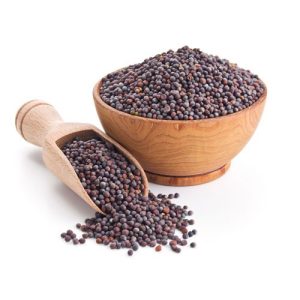
Chia seeds are the edible seeds of Salvia hispanica, a flowering plant in the mint family (Lamiaceae) native to Central America, or of the related Salvia columbariae of the southwestern United States and Mexico. Chia seeds are oval and gray with black and white spots, having a diameter around 1 millimetre (0.04 in). The seeds are hydrophilic, absorbing up to 12 times their weight in liquid when soaked and developing a mucilaginous coating that gives chia-based foods and beverages a distinctive gel texture.
There is evidence that the crop was widely cultivated by the Aztecs in pre-Columbian times and was a staple food for Mesoamerican cultures. Chia seeds are cultivated on a small scale in their ancestral homeland of central Mexico and Guatemala and commercially throughout Central and South America.
Buying Chia Microgreens Seeds for Commercial Production
Recognized as a leading supplier of bulk commercial sprout and microgreens seeds, we are well-positioned to supply you with Chia seeds. We supply growers globally, and we’d love to have you as a new customer. Call now to get our latest chia sprout seeds pricing. We can be reached at (800) 277-7688.
Black Chia Microgreens Seeds for Commercial Growers
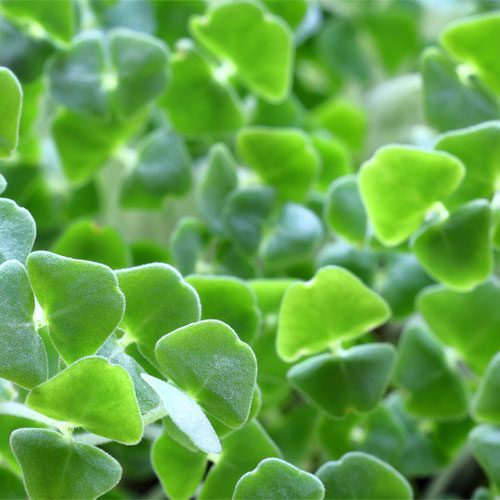
Chia is the most distinctive crop in this catalog and the one that requires the most technique. The seed is mucilaginous: add water and it forms a gel rather than staying loose. That behavior makes it useless in a rotating drum and excellent in a tray, where the gel holds the seed exactly where you put it and the microgreen comes up as a fine, dense, upright stand with a mild fresh flavor.
Chefs and juice producers like it for exactly that texture and appearance, and because chia is a name consumers already trust from the retail seed aisle, a chia microgreen sells without a speech.
Growing notes
Do not soak chia and do not try to sprout it in a vessel. This is a tray crop, misted rather than flooded, seeded thinly and evenly on a firm surface. The gel that forms on contact with water is your friend for seed placement and your enemy if you overwater, because a saturated gel layer excludes air. Penn State Extension places the broader group of small tray crops in the general 7 to 21 day window; chia sits toward the short end when conditions are right.
- Clean, uniform seed, which matters more than usual here because you cannot rinse a mucilaginous seed to fix a dirty lot.
- Untreated and grown for food use.
- Germination figure and lot number with every order.
Food safety and documentation
Tray-grown microgreens harvested for raw consumption still need a documented seed control. FDA’s sprout framework in 21 CFR part 112, Subpart M is the reference point most auditors reach for. Every lot we offer clears ISS food safety screening, and documentation is available on request.
Practical advice
If chia is new to you, order a small quantity and run one tray before you commit to a production slot. It is not a difficult crop once you have watched it behave, but it does not behave like anything else on your bench. Call us at (800) 277-7688 and we will tell you what we have seen work.
Questions about a lot, a germination figure, or which size makes sense for your run? Call us at (800) 277-7688 or send us a note. You will get somebody who has grown this crop, not a call center.