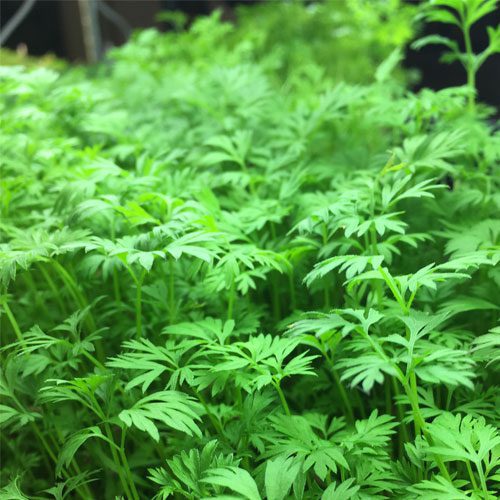
Carrot Sprouting and Microgreens Seeds
Just like their mature counterparts, carrot microgreens are packed with nutrients and taste like carrot roots. Exceptionally rich source of anti oxidants, carotenes and vitamin A, this variety of microgreens helps keep skin, lung and oral cavity cancers at bay. Best grown in soil or other growing medium. Carrot microgreens are ideal if you are looking for a quick fix for your health food.
Recognized as a leading supplier of bulk commercial sprout and microgreens seeds, we are well-positioned to supply you with Carrot seeds. We supply growers globally, and we’d love to have you as a new customer. Call now to get our latest seeds and pricing. We can be reached at (800) 277-7688.
Carrot Sprouting and Microgreens Seeds for Commercial Growers
Carrot microgreens are a specialty item with a genuinely useful flavor. The greens come up fine and feathery, closer to dill in appearance than to anything you would guess, and they taste unmistakably of carrot with a light herbal edge. Chefs use them on fish, in spring dishes and as a garnish that actually contributes flavor instead of just sitting there.
This is a patience crop and a premium crop, and those two facts are related. Carrot is slow, most growers do not bother, and the ones who do can charge for it.
Growing notes
Carrot seed is small, light and slow to germinate, and it stays in the tray long enough that room discipline matters. Penn State Extension groups carrot with the crops in the general 7 to 21 day window for microgreen production, and carrot sits at the long end of that range in practice. Seed thinly, mist rather than flood, and keep airflow steady across the whole cycle rather than just the first few days.
- Fresh seed, tested by lot. Carrot viability declines with age faster than most seeds here, so lot age is a real factor rather than a technicality.
- Untreated and grown for food use. Garden carrot seed is frequently treated and is not suitable for this.
- Germination figure and lot identity with every order, which matters most on a slow crop where a weak lot costs you two weeks of bench space.
Food safety and documentation
A long cycle means more days under your controls. FDA’s sprout requirements are in 21 CFR part 112, Subpart M, covering seed treatment, agricultural water, environmental monitoring and spent sprout irrigation water sampling. Every lot we sell passes ISS food safety screening, with documentation available for your records.
Where it fits
Sell carrot as part of a chef list, not as a standalone retail item. It pairs naturally with cilantro and garlic chives, which are slow in the same way and priced in the same tier.
Questions about a lot, a germination figure, or which size makes sense for your run? Call us at (800) 277-7688 or send us a note. You will get somebody who has grown this crop, not a call center.